facebook sharing button
twitter sharing button
email sharing button
whatsapp sharing button
sms sharing button
sharethis sharing button
arrow_left sharing button
arrow_right sharing button

About the Event


What happens when AI doesn't just assist research — but conducts it? AI Agents4Qual 2026 is the first conference to require AI authorship, creating a transparent, open environment to observe, evaluate, and debate what AI agents can and cannot do in qualitative research. On March 13, 2026, researchers, methodologists, and practitioners from around the world will gather virtually to explore this question together. Come ready to be challenged, surprised, and part of a conversation that is shaping the future of qualitative science.


Agenda


08:30 AM - 09:00 AM GMT+1:00

Arrival & Connect

The doors are open! Come in, get oriented, and make yourself...

The doors are open! Come in, get oriented, and make yourself at home. Browse the full programme, plan your day by selecting the sessions that matter most to you, and connect with fellow participants before the day begins.

03:00 PM - 03:30 PM GMT+1:00

Llegada y Conexión

TIME ZONE: 9:00 to 9:30 GMT-5 Las puertas están abiertas! ...

TIME ZONE: 9:00 to 9:30 GMT-5

 Las puertas están abiertas! Entra, oriéntate y ponte cómodo. Explora el programa completo, planifica tu día seleccionando las sesiones que más te interesan y conecta con otros participantes antes de que comience la jornada.

05:00 PM - 05:30 PM GMT+1:00

Arrival & Connect (US time zone)

8:00 – 8:30 PST / 11:00 - 11:30 EST The doors are open! C...

8:00 – 8:30 PST / 11:00 - 11:30 EST

 The doors are open! Come in, get oriented, and make yourself at home. Browse the full programme, plan your day by selecting the sessions that matter most to you, and connect with fellow participants before the day begins.

09:00 AM - 10:00 AM GMT+1:00

KEYNOTE: Letting Go — Or Not: How Researchers Experienced Handing the Wheel to AI

What does it actually look like when researchers step back a...

What does it actually look like when researchers step back and let AI lead? This keynote takes a bird's-eye view of the 24 submissions to AIAgents4Qual 2026, mapping the many different ways researchers navigated the challenge of delegating agency to AI — from those who fully relinquished control to those who found themselves quietly taking it back. What patterns emerged? What did researchers struggle with? And what does this diversity tell us about where we are, collectively, in our relationship with AI as a research partner?
We close with a look behind the curtain of the conference itself — sharing the prompts used for AI peer review and the thinking behind a process that asked three LLMs to do what humans usually do alone.

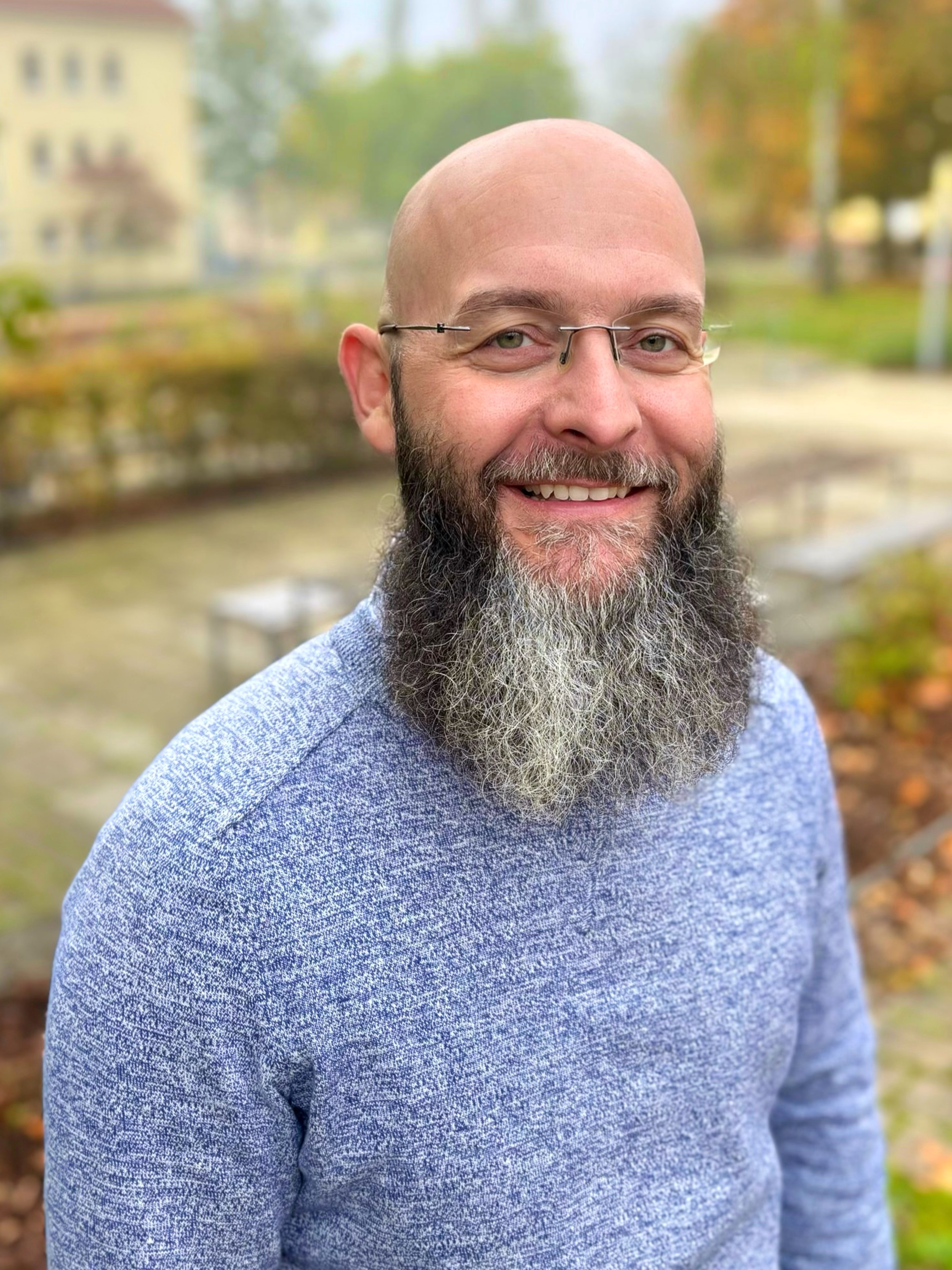
Susanne Friese

Conference organizer & Chair,

Dr. Susanne Friese is a scholar of qualitative methods with a long track record in research, teaching, and methodological development. Her work spans interpretive approaches, and the evolution of computer assisted analysis. In recent years she has become a leading voice in rethinking how qualitative analysis is done in an era shaped by artificial intelligence. Her focus lies on dialogue based inquiry, transparency, and the integration of AI in ways that strengthen rather than replace human interpretation.

Fabio Roman Lieder

Bundeswehr University Munich

10:15 AM - 01:30 PM GMT+1:00

Track A / Session 1: + 2 The Infinite Loop: Autonomy, Traceability, and the Ghost of the Human Author / Simulating the Subject: Synthetic Voices and the Limits of Digital Empathy

These are two sessions with a break in between. 10:15 - 11:...

These are two sessions with a break in between. 


10:15 - 11:30

SESSION 1A: The Infinite Loop: Autonomy, Traceability, and the Ghost of the Human Author

Host: Monika Gesing, Co-host: Maik Arnold

Keisuke Hidaka: 

From Hypothesis to Manuscript Without a Human in the Loop: An AI-Led Framework Analysis of Diagnostic Imaging AI Discourse 

Steven Powell

Lonely in London -- a qualitative analysis written entirely by an AI which iteratively edited its own instructions


11:30- 12:15

NETWORKING BREAK    


12:15 - 13:30

SESSION 2A – Simulating the Subject: Synthetic Voices and the Limits of Digital Empathy

Host: Fabio Lieder, Co-host: Susanne Friese

Marco R. Esposito 

Synthetic Voices, Authentic Patterns? AI-Generated Qualitative Interviews on Organizational AI Integration

Christoph Skofic & Florian Buehler 

AI Focus Groups as Epistemic Instruments: A Multi- Model Framework for Simulated and Interactive Group Discussions

Steve Powell

Co-Founder Causal Map, Independent Evaluation Researcher,

Steve has led and contributed to many social science research projects around the world, from evaluating psychosocial interventions after wars and disasters to counting stray dogs in Sarajevo. His fascination with qualitative causal analysis led him to develop the Causal Map and Qualia Interviews apps and co-found Causal Map Ltd, where he is busy integrating GenAI into the workflows

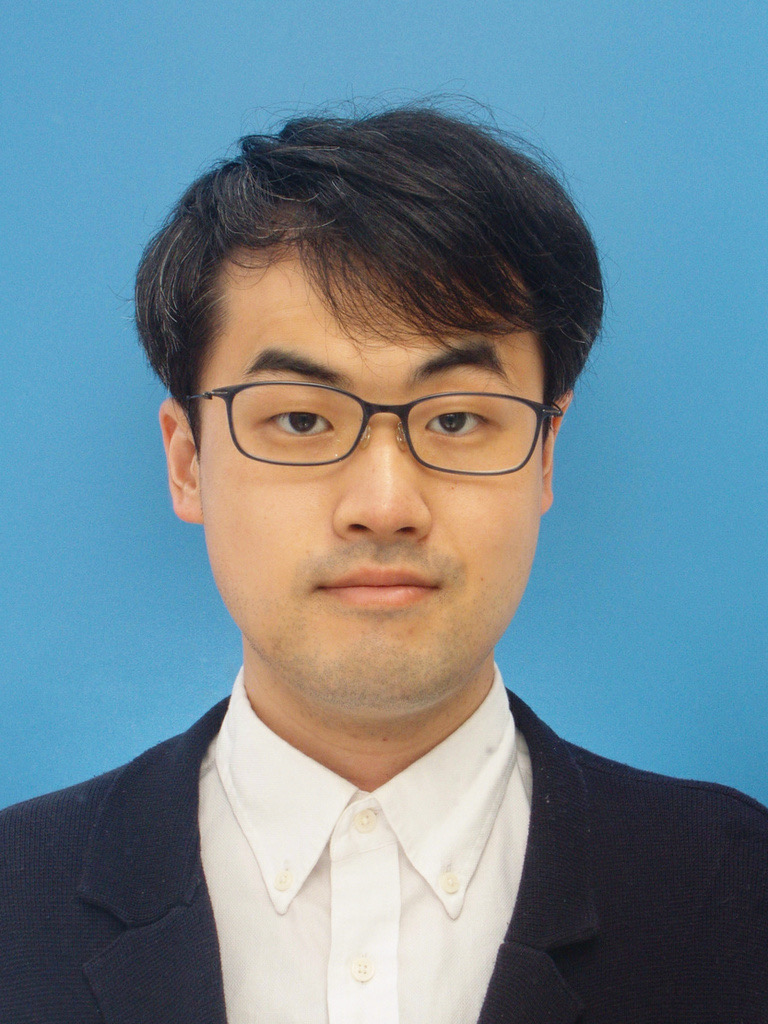
Keisuke Hidaka

Radiologist, Japan

Radiologist specializing in diagnostic imaging, and also working in interventional radiology. Also engaged in competitive machine learning as a personal interest. Interested in image analysis and computer-aided diagnosis.

Florian Buehler

Senior Lecturer, Vorarlberg University of Applied Sciences

Florian Buehler is a lecturer in marketing and consumer behavior at Vorarlberg University of Applied Sciences in Austria. He researches how artificial intelligence and digital technologies shape consumer decision-making and marketing practice. Passionate about bridging academia and industry. Enjoys turning complex research into practical insights.

Marco Esposito

Founder / Course Manager, VISAVI

Marco Esposito is Course Manager for "Leading AI & Digital Transformation" at the University of Liechtenstein, external lecturer at University of Applied Sciences Vorarlberg, trainer for Generative and Agentic AI, and soon-to-be PhD student researching organizational AI adoption.

Monika Gesing

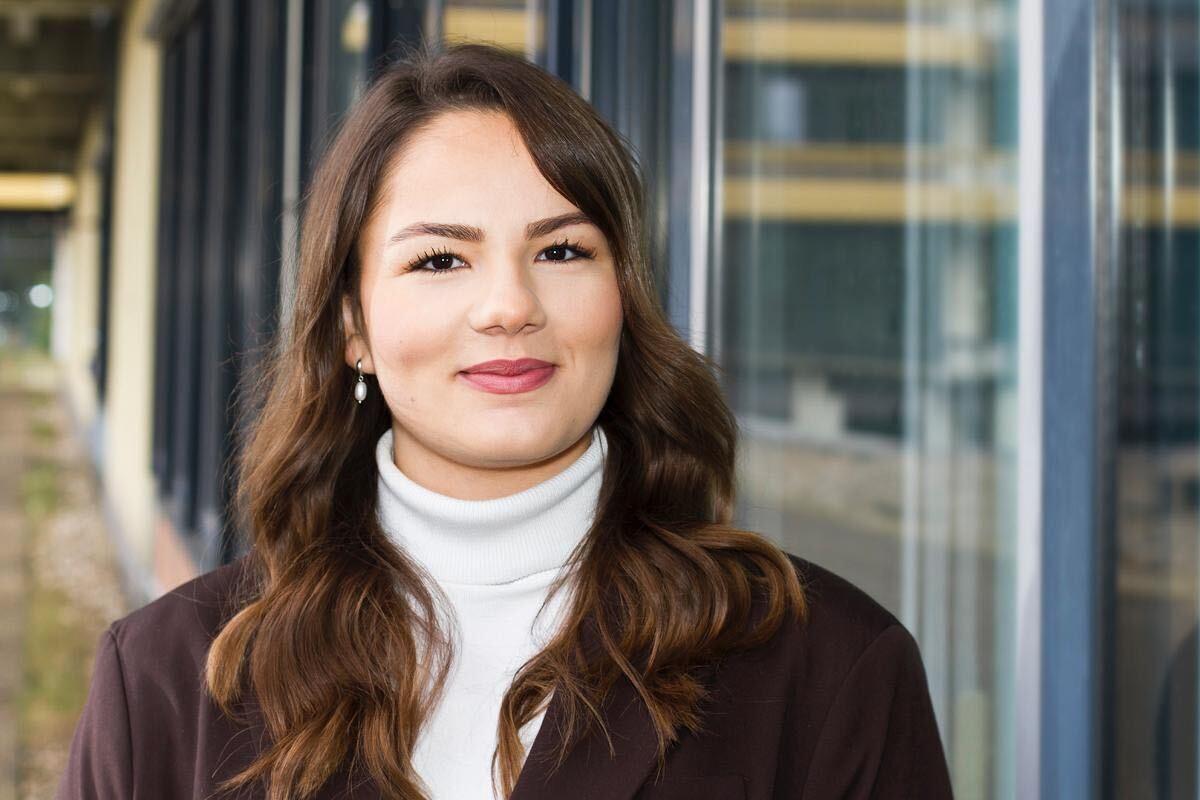
Conference Organizer & Chair, Ruhr University Bochum

Monika Gesing is a Research Assistant and Doctoral Researcher at the Institute of Educational Science in the research group Social Spaces of Non-Formal and Informal Learning at Ruhr University Bochum, Germany. Her research focuses on Digital Well-Being. In her empirical work, she uses qualitative methods, including interviews and diary studies, and analyzes data using Grounded Theory Methodology. Her current interest in artificial intelligence centers on the methodological implications of AI for qualitative research. She is interested in questions such as how can AI tools be integrated into qualitative research in methodologically grounded and responsible ways? And how does their use reshape the role and practices of researchers?
Fabio Roman Lieder

Bundeswehr University Munich

Christoph Skofic

Creative Director,

2024-2026 Master International Management and Leadership Fachhochschule Vorarlberg 2015 Weiterbildung: ACES Colorspace Workflow bei Charles Poynton 2014 Minneapolis College of Art and Desgin - Advanced Filmmaking and Experimental Filmmaking 2013 Weiterbildung: Camera Characterization according to ISO and EMVA 1288 standards 2012-2015 Fachhochschule Vorarlberg Bachelorstudium Intermedia. Abschluss mit ausgezeichnetem Erfolg 2008 Wimbledon School of English - English for Filmmakers Course 2006-2007 Karl-Franzens Universität Graz - Studium der Philosophie 2000-2005 HTBLA Ortweinschule Graz - Audiovisuelles Mediendesign (Spezialisierung Film und Fotografie

Dennis Kurrek

Research Assistant,

Research Assistant, mostly focussing on political culture in autocracies
02:15 PM - 03:30 PM GMT+1:00

Track A / Session 3: The "Messy" Reality of Delegation

Host: Susanne Friese, Co-host: DipanwitaAnette Hoxtell: AI ...

Host: Susanne Friese, Co-host: Dipanwita

Anette Hoxtell: 

AI agents and the evolving role of marketing professionals – a qualitative exploratory study with AI agents led by AI agents

Patryk Jarmakowicz-Westphal: 

Delegating the Discovery: An AI-Led Integrative Review of Empathy’s Role in Design Thinking Discourse

Annette Hoxtell

Professor of Marketing, Erfurt University of Applied Sciences

Annette Hoxtell is professor of marketing at Erfurt University of Applied Sciences, Germany. She researches social and macro marketing, qualitative methods and entrepreneurs. Passionate about teaching – especially marketing for the social good. Loves to think outside the box.

Patryk Jarmakowicz-Westphal

PhD Candidate, Rotterdam School of Management/Erasmus University Rotterdam

Patryk Jarmakowicz-Westphal is a PhD candidate at the Rotterdam School of Management, Erasmus University (RSM/ERIM), researching how AI reshapes professional expertise - particularly the tensions around delegation, human oversight, and sense-making in AI-human collaboration. His fieldwork spans the horticulture industry, where he studies how practitioners integrate AI into their daily work. Before academia, he worked with European and global organizations including USE-IT Europe, Effective Altruism, and Open European Dialogue. He is based in Rotterdam.

Dipanwita Guhathakurta

Research Software Engineer,

Research Software Engineer

05:30 PM - 06:15 PM GMT+1:00

EVENING KEYNOTE: I Didn't Expect to Feel This Way: Researchers' Experiences Handing Agency to AI

Behind every paper submitted to AIAgents4Qual 2026 is a huma...

Behind every paper submitted to AIAgents4Qual 2026 is a human experience — of surprise, discomfort, relief, or unease. This keynote goes beneath the methodology to explore what researchers actually felt when AI took the lead: the moments of doubt, the unexpected discoveries, and the quiet renegotiations of professional identity. 

We close with a look behind the curtain of the conference itself — sharing the exact prompts used for AI peer review, walking through the process of how we designed and ran the review, and reflecting on what it meant to hand that responsibility to three LLMs.

Susanne Friese

Conference organizer & Chair,

Dr. Susanne Friese is a scholar of qualitative methods with a long track record in research, teaching, and methodological development. Her work spans interpretive approaches, and the evolution of computer assisted analysis. In recent years she has become a leading voice in rethinking how qualitative analysis is done in an era shaped by artificial intelligence. Her focus lies on dialogue based inquiry, transparency, and the integration of AI in ways that strengthen rather than replace human interpretation.
Fabio Roman Lieder

Bundeswehr University Munich

06:45 PM - 08:15 PM GMT+1:00

Track A / Session 4: From Debate to Autonomy: Varieties of AI Analytic Agency in Qualitative Research

Host: Maik Arnold, Co-host: DipanwitaMicha Pallesche & Uta H...

Host: Maik Arnold, Co-host: Dipanwita

Micha Pallesche & Uta Hauck-Thum: 

Teachers’ prompts as qualitative data - Using an AI agent to identify teaching orientations through real-world prompt interactions

Steven Powell: 

Lonely in London -- a qualitative analysis written entirely by an AI which iteratively edited its own instructions

Susanne Friese:

Lonely in Rotterdam: Four AI Systems, One Researcher, Two Days

Susanne Friese

Conference organizer & Chair,

Dr. Susanne Friese is a scholar of qualitative methods with a long track record in research, teaching, and methodological development. Her work spans interpretive approaches, and the evolution of computer assisted analysis. In recent years she has become a leading voice in rethinking how qualitative analysis is done in an era shaped by artificial intelligence. Her focus lies on dialogue based inquiry, transparency, and the integration of AI in ways that strengthen rather than replace human interpretation.

Steve Powell

Co-Founder Causal Map, Independent Evaluation Researcher,

Steve has led and contributed to many social science research projects around the world, from evaluating psychosocial interventions after wars and disasters to counting stray dogs in Sarajevo. His fascination with qualitative causal analysis led him to develop the Causal Map and Qualia Interviews apps and co-found Causal Map Ltd, where he is busy integrating GenAI into the workflows

Uta Hauck-Thum

Professor of Primary School Education, Ludwig-Maximilians-University Munich

Uta Hauck-Thum is a professor of primary school education at Ludwig-Maximilians-University in Munich. Her research and teaching focus is on school transformation processes. Among other projects, she heads the Munich STEM cluster "Minti – Female Empowerment". Furthermore she investigates the language-promoting potential of humanoid robots for children with a migration background. She is member of the committee for innovation and future technology of the Bavarian Ministry of Education.

Dipanwita Guhathakurta

Research Software Engineer,

Research Software Engineer

08:45 PM - 10:00 PM GMT+1:00

Track A / Session 5: The Meaning-Making Gap: Patient Narratives and the Limits of Automated Empathy

Host: Monika Gesing, Co-host: DipanwitaSamantha Hurst: Fict...

Host: Monika Gesing, Co-host: Dipanwita

Samantha Hurst: 

Fictional Study, Seriously Examined: AI-Led Qualitative Analysis of Synthesized Mammography Screening Data and Its Methodological Limits

Sarah L. Newman & Jill Owczarzak: 

Deep Discomfort and Methodological Insight: A Team Reflection on AI-Led Analysis of MS Interview Data

Sarah Newman

Graduate Student,

Sarah Newman is a doctoral student in implementation science at the Johns Hopkins Bloomberg School of Public Health. She is interested in qualitative and mixed-methods approaches to complex policy and organizational questions, and in the emerging role of AI agents in supporting qualitative research.

Jill Owczarzak

Professor, Johns Hopkins University

Jill Owczarzak is a Professor in the Department of Health, Behavior and Society at Johns Hopkins Bloomberg School of Public Health. Prior to joining BSPH, she was faculty at the Medical College of Wisconsin. She received her PhD in Anthropology from the University of Kentucky. Her research focuses on HIV, substance use, and gender and developing interventions to improve HIV care continuum outcomes for people living with HIV. She works primarily in Ukraine, South Africa, and the United States. Trained as a medical anthropologist and a qualitative researcher, she also developed and teaches several qualitative courses, including on data analysis, ethnography, and using software. She also co-authored the book "Teaching Qualitative Research in Public Health," published by Oxford University Press in 2026.

Samantha Hurst

Clinical Professor, UC San Diego - Herbert Wertheim School of Public Health

Dr. Samantha Hurst is a Clinical Professor in the Herbert Wertheim School of Public Health at the University of California, San Diego and a member of the Cancer Control Program at Moores Cancer Center. Trained as a medical anthropologist, her work examines how culture, lived experience, and institutional trust shape how people understand health information and navigate medical decisions. Her research focuses on early detection and follow-up for breast and cervical cancer, with particular attention to how patients interpret screening results and determine their next steps after receiving them in real clinical and community settings. Using qualitative and mixed methods, she studies how meaning-making, emotion, and prior healthcare experiences influence engagement with care. Dr. Hurst’s recent work explores how emerging generative AI systems intersect with qualitative inquiry. She is interested in what happens when analytic tasks are delegated to AI agents, how methodological credibility is performed in AI-generated research, and what forms of human oversight remain necessary to maintain epistemic integrity in qualitative analysis. She teaches graduate courses in qualitative and mixed methods and works with student trainees and faculty across disciplines to strengthen methodological rigor in applied public health research. Outside of work, she enjoys swimming, spending time with friends and family, and being enthusiastically supervised by her Shetland Sheepdogs.

Monika Gesing

Conference Organizer & Chair, Ruhr University Bochum

Monika Gesing is a Research Assistant and Doctoral Researcher at the Institute of Educational Science in the research group Social Spaces of Non-Formal and Informal Learning at Ruhr University Bochum, Germany. Her research focuses on Digital Well-Being. In her empirical work, she uses qualitative methods, including interviews and diary studies, and analyzes data using Grounded Theory Methodology. Her current interest in artificial intelligence centers on the methodological implications of AI for qualitative research. She is interested in questions such as how can AI tools be integrated into qualitative research in methodologically grounded and responsible ways? And how does their use reshape the role and practices of researchers?

Dipanwita Guhathakurta

Research Software Engineer,

Research Software Engineer

10:45 PM - 11:45 PM GMT+1:00

CLOSING EVENT: So, What Did We Just Witness? Reflections on AI as Researcher

This closing session brings everyone together for an open, u...

This closing session brings everyone together for an open, unscripted conversation. No slides, no formal presentations — just an honest collective reckoning with what we have seen today. What did AI do well? Where did it fall short? And what does that mean for qualitative research going forward?

The discussion will move from reflection to action. All papers presented at AI Agents4Qual 2026 are available on OpenReview, and the next step is to put human judgment alongside AI judgment. We will walk you through how that works and how to get involved. We will also open the floor to brainstorm how we disseminate what this conference has produced: what form should that take, and who wants to be part of making it happen?
The discussion can continued in the Lounge if more time is needed. 

Susanne Friese

Conference organizer & Chair,

Dr. Susanne Friese is a scholar of qualitative methods with a long track record in research, teaching, and methodological development. Her work spans interpretive approaches, and the evolution of computer assisted analysis. In recent years she has become a leading voice in rethinking how qualitative analysis is done in an era shaped by artificial intelligence. Her focus lies on dialogue based inquiry, transparency, and the integration of AI in ways that strengthen rather than replace human interpretation.

Fabio Roman Lieder

Bundeswehr University Munich

Monika Gesing

Conference Organizer & Chair, Ruhr University Bochum

Monika Gesing is a Research Assistant and Doctoral Researcher at the Institute of Educational Science in the research group Social Spaces of Non-Formal and Informal Learning at Ruhr University Bochum, Germany. Her research focuses on Digital Well-Being. In her empirical work, she uses qualitative methods, including interviews and diary studies, and analyzes data using Grounded Theory Methodology. Her current interest in artificial intelligence centers on the methodological implications of AI for qualitative research. She is interested in questions such as how can AI tools be integrated into qualitative research in methodologically grounded and responsible ways? And how does their use reshape the role and practices of researchers?

Mascha Liening

Research Fellow, Bielefeld University

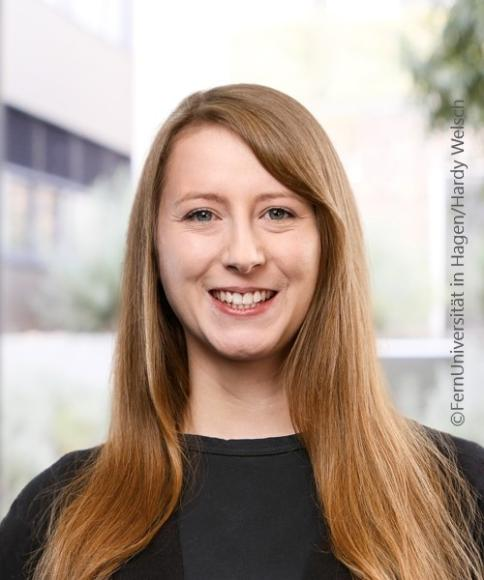
05/2024 – present: Research Fellow and PhD Student at the Graduate School Gender as Experience, Faculty of Sociology - Supervisor: Prof. Dr. Oliver Flügel-Martinsen, University of Bielefeld 04/2021 – 06/2024: Research Fellow and PhD Student at the Department of Comparative Politics, Institute of Political Science - Prof. Dr Michael Stoiber, FernUniversität Hagen
10:15 AM - 01:30 PM GMT+1:00

Track B / Session 1+2: Orchestrating the Machine: From Autonomous Analytics to the "Editor-of-Constraints" // The Methodological Irritant: AI as a Catalyst for Reflexive Interpretation

These are two sessions with a break in between 10:15: - 11:...

These are two sessions with a break in between


10:15: - 11:30

SESSION 1B: 

Orchestrating the Machine: From Autonomous Analytics to the "Editor-of-Constraints

Host: Mascha Liening, Co-host: Dennis Kurrek

Liquan Liu: 

Which AI agent best supports AI-led qualitative research writing? A dual-track evaluation of Gemini, ChatGPT, and Microsoft 365 Copilot

Victoria Vlaikova: 

Confident and Wrong: AI Hallucination and Divergent Reasoning in Regulatory Compliance Analysis Under EN 14411 and the EU Construction Products Regulation


11:30 - 12:15

NETWORKING   


12:15 - 13:30

SESSION 2b: The Methodological Irritant: AI as a Catalyst for Reflexive Interpretation

Host: Monika Gesing, Co-host: Dennis Kurrek

Gerald Wolf, Gerhard Haentjes & Hong Nhung Nguyen: 

AI-Generated Coding Systems in Qualitative Social Research as a Methodological Irritation (a classroom exercise)

Mail Arnold

Interpretation Workshop with AI Agents: A Claude Agent Team Experiment on Intersubjective Validation in Thematic Analysis

Gerald Wolf

QM-Manager, University of Cologne (UoC)

Gerald Wolf studied sociology at the University of Vienna and is in the final stage of his doctoral dissertation on the topic "From the Like Button to the Ballot Box – Political Participation in the Age of Social Web. A Grounded Theory from a Student Perspective" at the Faculty of Humanities. Since the winter semester of 2017, he has been offering his seminar "Collection and Analysis of Qualitative Data" as part of the Studium Integrale program at the ProfessionalCenter. He works as a Quality Management Manager for Teaching and Studies in the Q³ team (Q³ – Evaluation, Development & Accreditation) in the Vice-Rectorate for Teaching and Studies, and serves as administrator of the EvaSys evaluation software at the University of Cologne.

Gerhard Haentjes

Student, Universität Köln

apprenticeship chemical laboratory technician, Economics, Sociology and Communication at the university of Mainz , Lecturer in data Analysis at the University of Mainz, Working in the Health Care System as CEO off a Company which runs Hospitals and Nursing Homes

Maik Arnold

Nordhausen University of Applied Sciences

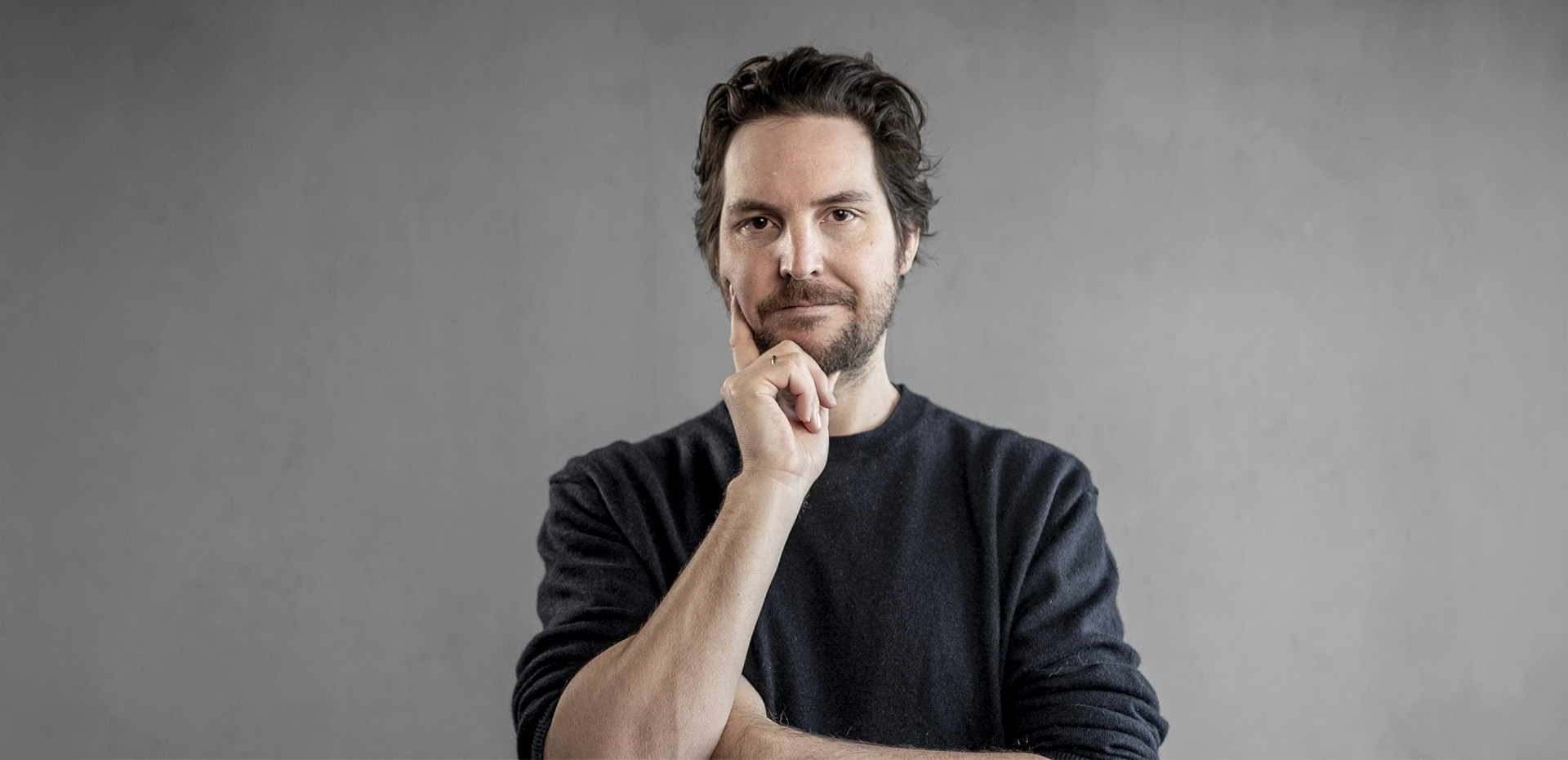
Dr Maik Arnold is Professor of Social Work Management at Nordhausen University of Applied Sciences, Germany, and a researcher working at the intersection of qualitative inquiry, higher education, and digital innovation. His expertise includes qualitative empirical research, knowledge management, and technology-enhanced learning, with a current focus on how AI agents and digital tools can enrich qualitative research practice, interpretation, and teaching.

Victoria Vlaikova

QMS specialist/PhD student, University of Economics Varna

Victoriya Vlaikova is a Bulgarian professional with a strong academic and practical background in economics, quality management, and marketing. She holds two Master's degrees from Shumen University — in Marketing and in Corporate Finance and Accounting — as well as a Bachelor's in Economics, and is currently pursuing a PhD in Marketing at the University of Economics in Varna. Since 2007, she has worked as a Quality Management System Specialist at KAI Group), where she oversees ISO 9001 documentation, internal audits, and risk assessments. She is a certified internal auditor (ISO 9001:2015).

Liquan Liu

Senior Lecturer, University of Technology Sydney

Liquan Liu is a researcher at the University of Technology Sydney (UTS) operating at the intersection of developmental science, language acquisition, and emerging digital technologies. This expertise is highlighted in his 2026 publication in Developmental Science, “Can Infants Perceive and Learn New Information from Extended Reality?”. In the rapidly evolving space of AI agents, Liquan is actively evaluating leading models—including Gemini, ChatGPT, and Copilot—to determine their efficacy and reliability in scientific research aid. Liquan is in full support of AI development, and trusts AI more than humans.

Monika Gesing

Conference Organizer & Chair, Ruhr University Bochum

Monika Gesing is a Research Assistant and Doctoral Researcher at the Institute of Educational Science in the research group Social Spaces of Non-Formal and Informal Learning at Ruhr University Bochum, Germany. Her research focuses on Digital Well-Being. In her empirical work, she uses qualitative methods, including interviews and diary studies, and analyzes data using Grounded Theory Methodology. Her current interest in artificial intelligence centers on the methodological implications of AI for qualitative research. She is interested in questions such as how can AI tools be integrated into qualitative research in methodologically grounded and responsible ways? And how does their use reshape the role and practices of researchers?

Hong Nhung Nguyen

Student, Graduate student, University of Cologne

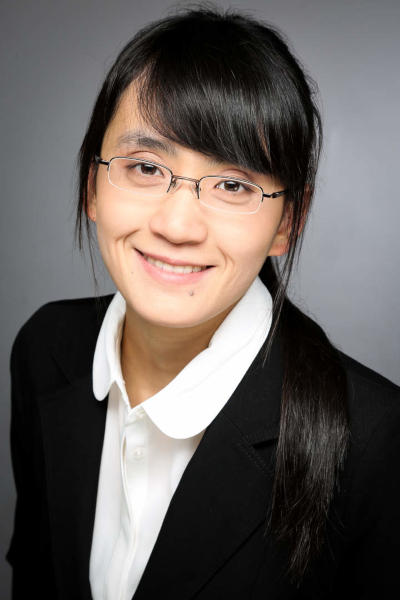
Hong Nguyen is currently a Bachelor's student of Information Processing and Japanese Culture at the University of Cologne. She has studied Pharmaceutical Chemistry (B.Sc.) and Life and Medical Sciences (M.Sc.) before.
02:15 PM - 03:30 PM GMT+1:00

Track B / Session 3: The Disciplined vs. The Autonomous Analyst

Host: Mascha Liening, Co-host: Dennis KurrekSallek Yaks Musa...

Host: Mascha Liening, Co-host: Dennis Kurrek

Sallek Yaks Musa: 

27 Prompts and a Dataset: Testing AI Autonomy in Qualitative Research Through a Civil-Military Relations Case

Arno Simons

Can LLMs Follow the Rules of Objective Hermeneutics? A Prompt-Chained Pipeline + Open Invitation

Sallek Musa

Lecturer,

Dr Sallek Yaks Musa is a Lecturer in Criminology at the University of Northampton, specialising in civil–military relations, security studies, peace and conflict, governance, and armed groups. He earned his PhD in Sociology from Stellenbosch University with a focus on military sociology, following an MSc in Criminology (Distinction) from the University of Northampton and a BSc in Sociology from the University of Jos. His work examines the dynamics between armed forces, state authority, and society, with publications on military professionalism and internal security operations. He has held competitive fellowships, including awards from the Social Science Research Council (SSRC) and the Lisa Maskel Fellowship, and previously held academic roles at Stellenbosch University South Africa, and the University of Jos and Plateau State University in Nigeria. He is an active member of international scholarly networks and reviews for reputable academic journals.

Arno Simons

Senior Researcher, Technische Universität Berlin

Arno is an interdisciplinary science scholar who studies how scientists communicate with one another and with policymakers, journalists, and the public. His research combines computational approaches including neural language modeling and corpus linguistics with social and bibliometric network analysis, alongside qualitative methods such as discourse analysis and grounded theory. Lately, he has been busy investigating large language models as interpretive research tools in science and technology studies and connecting researchers internationally around this emerging area.
04:15 PM - 05:00 PM GMT+1:00

INTERMEZZO: When the Jury is a Machine – A Closer Look at the AI Peer Review Process

This session pulls back the curtain on one of the most provo...

This session pulls back the curtain on one of the most provocative experiments of the conference: the automated peer review. In this open conversation, we will share the results of this "blind" automated panel. We will move beyond the scores to examine the specific qualitative feedback the models provided, uncovering surprising patterns in how they "read" research. 

 All papers presented at AI Agents4Qual 2026 are available on OpenReview, and the next step is to put human judgment alongside AI judgment. We will discuss how you can get involved in this process.

Susanne Friese

Conference organizer & Chair,

Dr. Susanne Friese is a scholar of qualitative methods with a long track record in research, teaching, and methodological development. Her work spans interpretive approaches, and the evolution of computer assisted analysis. In recent years she has become a leading voice in rethinking how qualitative analysis is done in an era shaped by artificial intelligence. Her focus lies on dialogue based inquiry, transparency, and the integration of AI in ways that strengthen rather than replace human interpretation.

Fabio Roman Lieder

Bundeswehr University Munich

Mascha Liening

Research Fellow, Bielefeld University

05/2024 – present: Research Fellow and PhD Student at the Graduate School Gender as Experience, Faculty of Sociology - Supervisor: Prof. Dr. Oliver Flügel-Martinsen, University of Bielefeld 04/2021 – 06/2024: Research Fellow and PhD Student at the Department of Comparative Politics, Institute of Political Science - Prof. Dr Michael Stoiber, FernUniversität Hagen
08:45 PM - 10:00 PM GMT+1:00

Track B / Session 5: What AI Takes for Granted: Cultural Scripts and Ideological Defaults in AI-Led Qualitative Research

Host: Mascha Liening, Co-host: Fabio LieberMarie Segares: L...

Host: Mascha Liening, Co-host: Fabio Lieber

Marie Segares: 

Learning to Lead from Behind: Human Oversight in AI-Led Discourse Analysis of Vermont B Corporations

Florian Buehler, Christoph Skofic: 

Prompted Brand Visibility in Generative AI Answers - How query framing, persona prompts, and stochasticity shape brand 

Florian Buehler

Senior Lecturer, Vorarlberg University of Applied Sciences

Florian Buehler is a lecturer in marketing and consumer behavior at Vorarlberg University of Applied Sciences in Austria. He researches how artificial intelligence and digital technologies shape consumer decision-making and marketing practice. Passionate about bridging academia and industry. Enjoys turning complex research into practical insights.

Marie Segares

Associate Professor, Champlain College

Marie Segares is a career intrapreneur in the non-profit sector with expertise in program development, launch, and expansion. She earned her AB in Sociology from Barnard College, her MPH in Sociomedical Sciences with a concentration in Health Promotion and Disease Prevention from Columbia University, her MBA in Entrepreneurship & Innovation, and Leadership & Change Management from New York University, and her EdD in Organizational Leadership Studies from Northeastern University. She is currently a Robert P. Stiller endowed chair, associate professor of Business and Management, and program director at the Stiller School of Business at Champlain College.

Christoph Skofic

Creative Director,

2024-2026 Master International Management and Leadership Fachhochschule Vorarlberg 2015 Weiterbildung: ACES Colorspace Workflow bei Charles Poynton 2014 Minneapolis College of Art and Desgin - Advanced Filmmaking and Experimental Filmmaking 2013 Weiterbildung: Camera Characterization according to ISO and EMVA 1288 standards 2012-2015 Fachhochschule Vorarlberg Bachelorstudium Intermedia. Abschluss mit ausgezeichnetem Erfolg 2008 Wimbledon School of English - English for Filmmakers Course 2006-2007 Karl-Franzens Universität Graz - Studium der Philosophie 2000-2005 HTBLA Ortweinschule Graz - Audiovisuelles Mediendesign (Spezialisierung Film und Fotografie

Fabio Roman Lieder

Bundeswehr University Munich

03:30 PM - 04:45 PM GMT+1:00

Track C / Bienvenido & Sesión 1: Más allá de la "falacia esqueuomórfica": La IA como artefacto ontológico

9:30 - 9:45 GMT-5 BIENVENIDO 9:45 - 10:45 GMT-5Sesión 1: ...

9:30 - 9:45 GMT-5 

BIENVENIDO 


9:45 - 10:45 GMT-5

Sesión 1: Más allá de la "falacia esqueuomórfica": La IA como artefacto ontológico


Luis Alfredo Loaiza Quintero, Elias Sevilla Casas (Argentina): 

Incongruencia Ontológica y Extractivismo Epistémico: Un Diálogo IA-Humano sobre la Teoría de Santiago y la Investigación Cualitativa

Elias Sevilla Casas, Luis Alfredo Loaiza Quintero (Argentina): 

Resumen de una Propuesta sobre Métodos en Ciencia Social para Trabajo con Modelos de Lenguaje


10:45 - 11:15 GMT-5

Pausa para café / teca


Luis Alfredo Loaiza

Docente y Asesor del Área de Informática Aplicada del Centro CEIA/FLACSO -Argentina, FLACSO Argentina

Sociólogo. Técnico Profesional en Sistemas de Información. Magíster en Desarrollo Humano de FLACSO-Argentina. Profesor titular y Asesor del Área de Informática del Centro de Estadística e Informática Aplicada- CEIA de la FLACSO- Buenos Aires – Argentina. Consultor en procesos de investigación social impulsados por Inteligencia Artificial para instituciones y empresas en Latinoamérica.

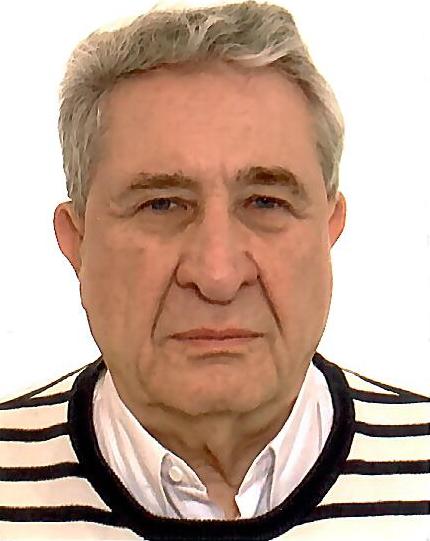
Elías Sevilla Casas

Profesor titular jubilado de la Facultad de Ciencias Sociales y Económicas de la Universidad del Valle, Universidad del Valle

Profesor titular jubilado de la Facultad de Ciencias Sociales y Económicas de la Universidad del Valle; PhD en antropología (Northwestern University, 1973); con cinco décadas de experiencia en investigación social, y docencia en métodos; autor de numerosas publicaciones sobre el tema.

05:15 PM - 06:15 PM GMT+1:00

Track C / Sesión 2: ¿Curaduría o desplazamiento? Negociando la "esencia humana" en la pedagogía automatizada

11:15 – 12:15 GMT-5  Sesión 2: ¿Curaduría o desplazam...

11:15 – 12:15 GMT-5 

 Sesión 2: ¿Curaduría o desplazamiento? Negociando la "esencia humana" en la pedagogía automatizada

Julio Eduardo Mazorco Salas, Ivan Dario Hernández Umaña (Colombia): 

Retos en identidad y el rol docente en los escenarios de enseñanza con inteligencia artificial

Oscar Salvador Alvarez-Macotela (Reino Unido): 

Los Ofrecimientos de QInsights: sus desafíos, limitaciones y una visión sobre la neurodiversidad


12:15 -13:15

Pausa para café / tee      


Julio Eduardo Mazorco-Salas

Profesor de la facultad de Enfermería y director de la maestría en Salud Mental Comunitaria de la Universidad El Bosque, Universidad El Bosque -Colombia

Filósofo, psicólogo, Magíster en Educación de la Universidad de los Andes y Magíster en Salud Mental Comunitaria de la Universidad El Bosque. Doctorante en Desarrollo Local y Cooperación Internacional de la universidad Politécnica de Valencia. Profesor de la facultad de Enfermería y director de la maestría en Salud Mental Comunitaria de la Universidad El Bosque. Investigador Asociado Minciencias. Cofundador del Colectivo Profesores Cuidadores. Investigador en promoción de la salud en entornos educativos y la salud mental con enfoques participativos y emancipatorios, diseño de ambientes saludables y evaluación de capacidades y desarrollo humano.

Iván Darío Hernández

Profesor de la Escuela de diseño industrial de la Universidad Nacional de Colombia, Universidad Nacional de Colombia

Economista colombiano con formación de posgrado en economía en la Universidad Nacional de Colombia y en la University of Warwick, y PhD en Innovación y Competencia por la University of Manchester. Su trabajo académico se sitúa en la intersección entre economía evolutiva, innovación, análisis organizacional e investigación cualitativa. A lo largo de su trayectoria ha estudiado cómo las instituciones, las reglas sociales y los sistemas de significados influyen en los procesos de innovación, productividad y desarrollo económico. En sus investigaciones recientes ha desarrollado la idea de la economía como un campo de significados, explorando cómo las narrativas, los marcos interpretativos y las estructuras institucionales configuran el comportamiento económico. En este contexto, también analiza el potencial de nuevas herramientas analíticas, incluida la inteligencia artificial, para apoyar el análisis cualitativo de fenómenos sociales complejos. Además de su trabajo académico, ha participado en iniciativas orientadas a conectar investigación, diseño institucional y desarrollo regional, promoviendo una visión de la economía que combine rigor analítico con comprensión profunda de los procesos sociales y organizacionales. En la actualidad es Profesor de la Escuela de diseño industrial de la Universidad Nacional de Colombia y Secretario general de la Academia colombiana de ciencias económicas

Oscar Alvarez-Macotela

Vicepresidente de Red Global Mx-UK y abogado, investigador independiente en ciencias sociales (Reino Unido), Red Global Mx-UK (Reino Unido)

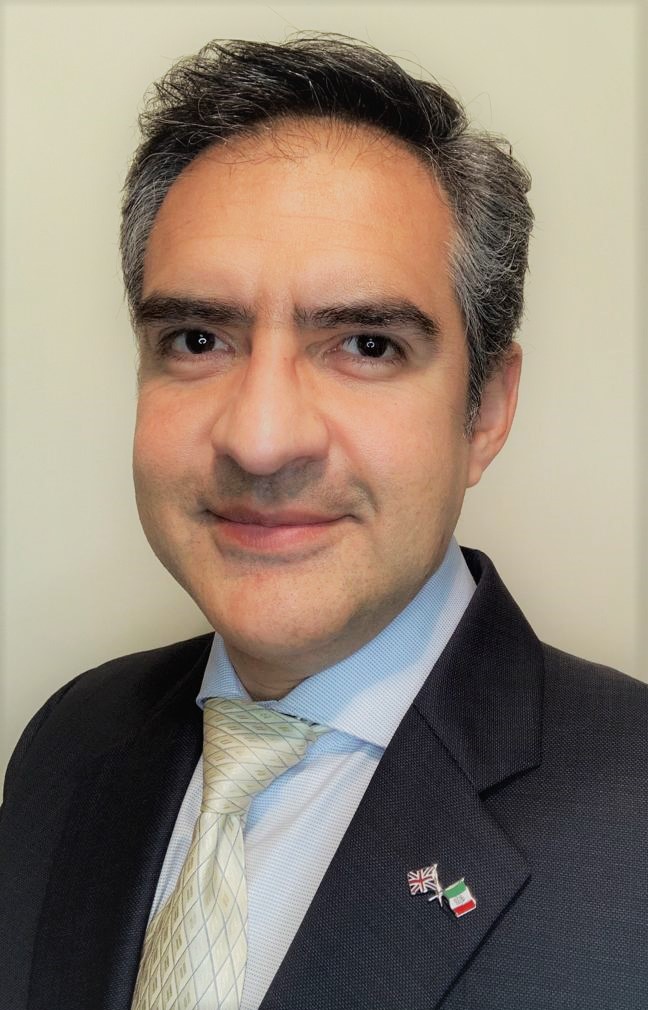
Abogado e investigador independiente en ciencias sociales. Doctor en Desarrollo Global y Maestría en Derecho Comercial Internacional por la Universidad de East Anglia, Reino Unido. Egresado de la Universidad Nacional Autónoma de México (UNAM). Abogado con experiencia en el sector financiero y con investigación posdoctoral en Uganda, Inglaterra y México. Interés en la gestión del impacto social y en iniciativas de transferencia de conocimiento sobre cambio climático y economía circular. Miembro de la Alianza Global de Abogados de Impacto (GAIL) y de la Red Global de Profesionales Mexicanos en el Extranjero (RGMX) en su capítulo con sede en Londres (RGMX-UK). Miembro del Consejo Asesor de Causa Natura.org (México).
07:15 PM - 09:45 PM GMT+1:00

Track C / Sesión 3 +4: Escalando el significado: Velocidad de la IA frente al sentido humano // ¿Quién Toma la Palabra? Diálogos sobre Autonomía y Praxis Algorítmica.

13:15 – 14:15 GMT-5Sesión 3: Escalando el significado: V...

13:15 – 14:15 GMT-5

Sesión 3: Escalando el significado: Velocidad de la IA frente al sentido humano

 Maria Elena Dávila-Díaz (Perú): 

Implicancias del uso de las rúbricas en el aprendizaje autónomo: ¿Andamiaje constructivista o celda pedagógica? Un análisis cualitativo liderado por IA

Alejandro Botero Carvajal, Angela María Jimenez Urrego, Luis Alfredo Loaiza Quintero (Colombia): 

La Superación de la Brecha entre Magnitud y Significado: El Liderazgo de la IA Cualitativa en la Informática de Políticas Híbridas del Global Burden of Disease


14:15 – 14:45 GMT-5

Pausa para café / teca    


14:45 – 15:45 GMT-5

Sesión 4: ¿Quién Toma la Palabra? Diálogos sobre Autonomía y Praxis Algorítmica.

 Liliana Tapias Torrado (Colombia): 

Cuando la IA toma la palabra: un experimento de investigación cualitativa liderada por un agente artificial

Miguel Ángel Gallegos Cárdenas (México): 

Subjetividad algorítmica y praxis pedagógica: Un análisis cualitativo mediante agentes de IA sobre la resignificación de la planeación docente en la educación pública


Angela María Jimenez Urrego

Investigadora Senior Docente Pontificia Universidad Javeriana Cali, Pontificia Universidad Javeriana Cali

Profesora tiempo completo en el programa de psicología en la Pontificia Universidad Javeriana de Cali. Profesora tiempo completo del área de posgrado en la Universidad de San Buenaventura de Cali. Investigadora Senior Minciencias.

Alejandro Botero Carvajal

Creador de Psicodata, investigador senior Global Burden Desease Universidad Santiago de Cali, Universidad Santiago de Cali

Profesor titular Universidad Santiago de Cali. Director de la línea salud colectiva del doctorado en ciencias de la salud. Lider del grupo de investigación en educación y salud. Colaborador Senior en el grupo de carga mundial de la enfermedad. Miembro de la sala CONACES salud y bienestar, editor académico de PlosOne. Consultor en mentorías de investigación y creador del canal Psicodata en Youtube.

María Elena Dávila-Díaz

Dra. en Educación. Docente e Investigadora Universidad Nacional Federico Villarreal - Perú, Universidad Nacional Federico Villarreal de Lima-Perú

Dra. en Educación. Magíster en Investigación y Docencia en Educación Superior. Docente adscrita al Departamento de Tecnología Educativa de la Universidad Nacional Federico Villarreal de Lima Perú. Miembro de la Red Internacional de Universidades con CADEP ACACIA y CEDALYC

Miguel Ángel Gallegos

Investigador del Centro de Educación de América Latina y el Caribe (CEDALyC), CEDALyC - México

Doctor en Ciencias Sociales con la especialidad en Sociedad y Educación, Maestro en Desarrollo y Planeación de la Educación y Licenciado en Administración. Toda su formación superior y de posgrado fue en la Universidad Autónoma Metropolitana, Unidad Xochimilco. Investigador del Centro de Educación de América Latina y el Caribe (CEDALyC), coordinación de vinculación de la Universidad YMCA, docente y director de trabajos terminales en la Universidad Nacional Rosario Castellanos y de Escuelas Secundarias Técnicas. Entre otros cargo que ha tenido, fue Coordinador de la Unidad de Proyectos Educativos y Coordinador de Posgrado del Instituto Latinoamericano de la Comunicación Educativa (ILCE), Director del programa de alfabetización digital de la Red Educativa Mundial (REDEM) y subdirector en la Asamblea Legislativa del Distrito Federal (ALDF). En 2022, recibió la Medalla al Mérito Docente, otorgada por el Congreso de la Ciudad de México, II Legislatura. Es miembro de la Red de Investigación Interdisciplinaria ''Educación Superior, Sociedad y Tecnología" (RIIEST) de la UAM, miembro de la Red Europea de Enseñanza Flexible, Universidad Nacional de Educación a Distancia (UNED). Fue secretario del Consejo Directivo de la Sociedad Mexicana de Computación en la Educación (SOMECE) y vicepresidente del Comité de Gestión por Competencias de Tecnologías de la Información y la Comunicación del CONOCER. Coordinador de los libros “Las Políticas Educativas en México: Problemas y Desafíos” (2019); y “Educación en México en Tiempos de Pandemia: Retos y Perspectivas” (2023), publicados ambos por la UAM-X y autor de diversos artículos académicos.

Liliana Tapias Torrado

Profesora e integrante del grupo de Investigación INVBOCA de la Facultad de Odontología, Universidad El Bosque - Colombia

Odontóloga y Magistra en Política Social de la Pontificia Universidad Javeriana y especialista en Endodoncia de la Universidad de Cartagena. Profesora e integrante del grupo de investigación INVBOCA, coordinadora Enlace HUB líder de Consultoría HUB iEX de la Facultad de Odontología de la Universidad El Bosque. Directora Ejecutiva de la Asociación Colombiana de Facultades de Odontología ACFO y Magistrada del Tribunal Nacional de Ética Odontológica.
10:15 PM - 11:30 PM GMT+1:00

Track C Evento de Cierre:: ¿Agente Autónomo o Provocador Reflexivo?

16:15 - 18:00 GMT-5Evento de Cierre: Entonces, ¿qué acabam...

16:15 - 18:00 GMT-5

Evento de Cierre: Entonces, ¿qué acabamos de presenciar? Reflexiones sobre la IA como investigadora

Esta sesión de clausura reúne a los participantes de la conferencia para una conversación abierta y espontánea. Sin diapositivas ni presentaciones formales; simplemente un balance colectivo y honesto de lo que hemos presenciado hoy. ¿Qué hizo bien la IA? ¿En qué falló? ¿Y qué significa esto para el futuro de la investigación cualitativa?

La discusión pasará de la reflexión a la acción. Todas las ponencias presentadas en AI Agents4Qual 2026 están disponibles en OpenReview, y el siguiente paso es situar el juicio humano junto al juicio de la IA. Les explicaremos cómo funciona este proceso y cómo pueden participar. También abriremos el espacio para una lluvia de ideas sobre cómo difundir lo que esta conferencia ha producido: ¿qué forma debería tener esa difusión y quién quiere formar parte de su creación?

Luis Alfredo Loaiza

Docente y Asesor del Área de Informática Aplicada del Centro CEIA/FLACSO -Argentina, FLACSO Argentina

Sociólogo. Técnico Profesional en Sistemas de Información. Magíster en Desarrollo Humano de FLACSO-Argentina. Profesor titular y Asesor del Área de Informática del Centro de Estadística e Informática Aplicada- CEIA de la FLACSO- Buenos Aires – Argentina. Consultor en procesos de investigación social impulsados por Inteligencia Artificial para instituciones y empresas en Latinoamérica.

Elías Sevilla Casas

Profesor titular jubilado de la Facultad de Ciencias Sociales y Económicas de la Universidad del Valle, Universidad del Valle

Profesor titular jubilado de la Facultad de Ciencias Sociales y Económicas de la Universidad del Valle; PhD en antropología (Northwestern University, 1973); con cinco décadas de experiencia en investigación social, y docencia en métodos; autor de numerosas publicaciones sobre el tema.

Speakers
+

Dennis Kurrek

Research Assistant,

Research Assistant, mostly focussing on political culture in autocracies
+

Hong Nhung Nguyen

Student, Graduate student, University of Cologne

Hong Nguyen is currently a Bachelor's student of Information Processing and Japanese Culture at the University of Cologne. She has studied Pharmaceutical Chemistry (B.Sc.) and Life and Medical Sciences (M.Sc.) before.
+

Christoph Skofic

Creative Director,

2024-2026 Master International Management and Leadership Fachhochschule Vorarlberg 2015 Weiterbildung: ACES Colorspace Workflow bei Charles Poynton 2014 Minneapolis College of Art and Desgin - Advanced Filmmaking and Experimental Filmmaking 2013 Weiterbildung: Camera Characterization according to ISO and EMVA 1288 standards 2012-2015 Fachhochschule Vorarlberg Bachelorstudium Intermedia. Abschluss mit ausgezeichnetem Erfolg 2008 Wimbledon School of English - English for Filmmakers Course 2006-2007 Karl-Franzens Universität Graz - Studium der Philosophie 2000-2005 HTBLA Ortweinschule Graz - Audiovisuelles Mediendesign (Spezialisierung Film und Fotografie

+

Mascha Liening

Research Fellow, Bielefeld University

05/2024 – present: Research Fellow and PhD Student at the Graduate School Gender as Experience, Faculty of Sociology - Supervisor: Prof. Dr. Oliver Flügel-Martinsen, University of Bielefeld 04/2021 – 06/2024: Research Fellow and PhD Student at the Department of Comparative Politics, Institute of Political Science - Prof. Dr Michael Stoiber, FernUniversität Hagen
+

Dipanwita Guhathakurta

Research Software Engineer,

Research Software Engineer

+

Oscar Alvarez-Macotela

Vicepresidente de Red Global Mx-UK y abogado, investigador independiente en ciencias sociales (Reino Unido), Red Global Mx-UK (Reino Unido)

Abogado e investigador independiente en ciencias sociales. Doctor en Desarrollo Global y Maestría en Derecho Comercial Internacional por la Universidad de East Anglia, Reino Unido. Egresado de la Universidad Nacional Autónoma de México (UNAM). Abogado con experiencia en el sector financiero y con investigación posdoctoral en Uganda, Inglaterra y México. Interés en la gestión del impacto social y en iniciativas de transferencia de conocimiento sobre cambio climático y economía circular. Miembro de la Alianza Global de Abogados de Impacto (GAIL) y de la Red Global de Profesionales Mexicanos en el Extranjero (RGMX) en su capítulo con sede en Londres (RGMX-UK). Miembro del Consejo Asesor de Causa Natura.org (México).
+

Maik Arnold

Nordhausen University of Applied Sciences

Dr Maik Arnold is Professor of Social Work Management at Nordhausen University of Applied Sciences, Germany, and a researcher working at the intersection of qualitative inquiry, higher education, and digital innovation. His expertise includes qualitative empirical research, knowledge management, and technology-enhanced learning, with a current focus on how AI agents and digital tools can enrich qualitative research practice, interpretation, and teaching.

+

Gerhard Haentjes

Student, Universität Köln

apprenticeship chemical laboratory technician, Economics, Sociology and Communication at the university of Mainz , Lecturer in data Analysis at the University of Mainz, Working in the Health Care System as CEO off a Company which runs Hospitals and Nursing Homes
+

Keisuke Hidaka

Radiologist, Japan

Radiologist specializing in diagnostic imaging, and also working in interventional radiology. Also engaged in competitive machine learning as a personal interest. Interested in image analysis and computer-aided diagnosis.
+

Monika Gesing

Conference Organizer & Chair, Ruhr University Bochum

Monika Gesing is a Research Assistant and Doctoral Researcher at the Institute of Educational Science in the research group Social Spaces of Non-Formal and Informal Learning at Ruhr University Bochum, Germany. Her research focuses on Digital Well-Being. In her empirical work, she uses qualitative methods, including interviews and diary studies, and analyzes data using Grounded Theory Methodology. Her current interest in artificial intelligence centers on the methodological implications of AI for qualitative research. She is interested in questions such as how can AI tools be integrated into qualitative research in methodologically grounded and responsible ways? And how does their use reshape the role and practices of researchers?

Fabio Roman Lieder

Bundeswehr University Munich

+

Samantha Hurst

Clinical Professor, UC San Diego - Herbert Wertheim School of Public Health

Dr. Samantha Hurst is a Clinical Professor in the Herbert Wertheim School of Public Health at the University of California, San Diego and a member of the Cancer Control Program at Moores Cancer Center. Trained as a medical anthropologist, her work examines how culture, lived experience, and institutional trust shape how people understand health information and navigate medical decisions. Her research focuses on early detection and follow-up for breast and cervical cancer, with particular attention to how patients interpret screening results and determine their next steps after receiving them in real clinical and community settings. Using qualitative and mixed methods, she studies how meaning-making, emotion, and prior healthcare experiences influence engagement with care. Dr. Hurst’s recent work explores how emerging generative AI systems intersect with qualitative inquiry. She is interested in what happens when analytic tasks are delegated to AI agents, how methodological credibility is performed in AI-generated research, and what forms of human oversight remain necessary to maintain epistemic integrity in qualitative analysis. She teaches graduate courses in qualitative and mixed methods and works with student trainees and faculty across disciplines to strengthen methodological rigor in applied public health research. Outside of work, she enjoys swimming, spending time with friends and family, and being enthusiastically supervised by her Shetland Sheepdogs.
+

Jill Owczarzak

Professor, Johns Hopkins University

Jill Owczarzak is a Professor in the Department of Health, Behavior and Society at Johns Hopkins Bloomberg School of Public Health. Prior to joining BSPH, she was faculty at the Medical College of Wisconsin. She received her PhD in Anthropology from the University of Kentucky. Her research focuses on HIV, substance use, and gender and developing interventions to improve HIV care continuum outcomes for people living with HIV. She works primarily in Ukraine, South Africa, and the United States. Trained as a medical anthropologist and a qualitative researcher, she also developed and teaches several qualitative courses, including on data analysis, ethnography, and using software. She also co-authored the book "Teaching Qualitative Research in Public Health," published by Oxford University Press in 2026.
+

Liliana Tapias Torrado

Profesora e integrante del grupo de Investigación INVBOCA de la Facultad de Odontología, Universidad El Bosque - Colombia

Odontóloga y Magistra en Política Social de la Pontificia Universidad Javeriana y especialista en Endodoncia de la Universidad de Cartagena. Profesora e integrante del grupo de investigación INVBOCA, coordinadora Enlace HUB líder de Consultoría HUB iEX de la Facultad de Odontología de la Universidad El Bosque. Directora Ejecutiva de la Asociación Colombiana de Facultades de Odontología ACFO y Magistrada del Tribunal Nacional de Ética Odontológica.
+

Marie Segares

Associate Professor, Champlain College

Marie Segares is a career intrapreneur in the non-profit sector with expertise in program development, launch, and expansion. She earned her AB in Sociology from Barnard College, her MPH in Sociomedical Sciences with a concentration in Health Promotion and Disease Prevention from Columbia University, her MBA in Entrepreneurship & Innovation, and Leadership & Change Management from New York University, and her EdD in Organizational Leadership Studies from Northeastern University. She is currently a Robert P. Stiller endowed chair, associate professor of Business and Management, and program director at the Stiller School of Business at Champlain College.
+

Steve Powell

Co-Founder Causal Map, Independent Evaluation Researcher,

Steve has led and contributed to many social science research projects around the world, from evaluating psychosocial interventions after wars and disasters to counting stray dogs in Sarajevo. His fascination with qualitative causal analysis led him to develop the Causal Map and Qualia Interviews apps and co-found Causal Map Ltd, where he is busy integrating GenAI into the workflows

+

Florian Buehler

Senior Lecturer, Vorarlberg University of Applied Sciences

Florian Buehler is a lecturer in marketing and consumer behavior at Vorarlberg University of Applied Sciences in Austria. He researches how artificial intelligence and digital technologies shape consumer decision-making and marketing practice. Passionate about bridging academia and industry. Enjoys turning complex research into practical insights.

+

María Elena Dávila-Díaz

Dra. en Educación. Docente e Investigadora Universidad Nacional Federico Villarreal - Perú, Universidad Nacional Federico Villarreal de Lima-Perú

Dra. en Educación. Magíster en Investigación y Docencia en Educación Superior. Docente adscrita al Departamento de Tecnología Educativa de la Universidad Nacional Federico Villarreal de Lima Perú. Miembro de la Red Internacional de Universidades con CADEP ACACIA y CEDALYC
+

Elías Sevilla Casas

Profesor titular jubilado de la Facultad de Ciencias Sociales y Económicas de la Universidad del Valle, Universidad del Valle

Profesor titular jubilado de la Facultad de Ciencias Sociales y Económicas de la Universidad del Valle; PhD en antropología (Northwestern University, 1973); con cinco décadas de experiencia en investigación social, y docencia en métodos; autor de numerosas publicaciones sobre el tema.

+

Miguel Ángel Gallegos

Investigador del Centro de Educación de América Latina y el Caribe (CEDALyC), CEDALyC - México

Doctor en Ciencias Sociales con la especialidad en Sociedad y Educación, Maestro en Desarrollo y Planeación de la Educación y Licenciado en Administración. Toda su formación superior y de posgrado fue en la Universidad Autónoma Metropolitana, Unidad Xochimilco. Investigador del Centro de Educación de América Latina y el Caribe (CEDALyC), coordinación de vinculación de la Universidad YMCA, docente y director de trabajos terminales en la Universidad Nacional Rosario Castellanos y de Escuelas Secundarias Técnicas. Entre otros cargo que ha tenido, fue Coordinador de la Unidad de Proyectos Educativos y Coordinador de Posgrado del Instituto Latinoamericano de la Comunicación Educativa (ILCE), Director del programa de alfabetización digital de la Red Educativa Mundial (REDEM) y subdirector en la Asamblea Legislativa del Distrito Federal (ALDF). En 2022, recibió la Medalla al Mérito Docente, otorgada por el Congreso de la Ciudad de México, II Legislatura. Es miembro de la Red de Investigación Interdisciplinaria ''Educación Superior, Sociedad y Tecnología" (RIIEST) de la UAM, miembro de la Red Europea de Enseñanza Flexible, Universidad Nacional de Educación a Distancia (UNED). Fue secretario del Consejo Directivo de la Sociedad Mexicana de Computación en la Educación (SOMECE) y vicepresidente del Comité de Gestión por Competencias de Tecnologías de la Información y la Comunicación del CONOCER. Coordinador de los libros “Las Políticas Educativas en México: Problemas y Desafíos” (2019); y “Educación en México en Tiempos de Pandemia: Retos y Perspectivas” (2023), publicados ambos por la UAM-X y autor de diversos artículos académicos.
+

Iván Darío Hernández

Profesor de la Escuela de diseño industrial de la Universidad Nacional de Colombia, Universidad Nacional de Colombia

Economista colombiano con formación de posgrado en economía en la Universidad Nacional de Colombia y en la University of Warwick, y PhD en Innovación y Competencia por la University of Manchester. Su trabajo académico se sitúa en la intersección entre economía evolutiva, innovación, análisis organizacional e investigación cualitativa. A lo largo de su trayectoria ha estudiado cómo las instituciones, las reglas sociales y los sistemas de significados influyen en los procesos de innovación, productividad y desarrollo económico. En sus investigaciones recientes ha desarrollado la idea de la economía como un campo de significados, explorando cómo las narrativas, los marcos interpretativos y las estructuras institucionales configuran el comportamiento económico. En este contexto, también analiza el potencial de nuevas herramientas analíticas, incluida la inteligencia artificial, para apoyar el análisis cualitativo de fenómenos sociales complejos. Además de su trabajo académico, ha participado en iniciativas orientadas a conectar investigación, diseño institucional y desarrollo regional, promoviendo una visión de la economía que combine rigor analítico con comprensión profunda de los procesos sociales y organizacionales. En la actualidad es Profesor de la Escuela de diseño industrial de la Universidad Nacional de Colombia y Secretario general de la Academia colombiana de ciencias económicas
+

Julio Eduardo Mazorco-Salas

Profesor de la facultad de Enfermería y director de la maestría en Salud Mental Comunitaria de la Universidad El Bosque, Universidad El Bosque -Colombia

Filósofo, psicólogo, Magíster en Educación de la Universidad de los Andes y Magíster en Salud Mental Comunitaria de la Universidad El Bosque. Doctorante en Desarrollo Local y Cooperación Internacional de la universidad Politécnica de Valencia. Profesor de la facultad de Enfermería y director de la maestría en Salud Mental Comunitaria de la Universidad El Bosque. Investigador Asociado Minciencias. Cofundador del Colectivo Profesores Cuidadores. Investigador en promoción de la salud en entornos educativos y la salud mental con enfoques participativos y emancipatorios, diseño de ambientes saludables y evaluación de capacidades y desarrollo humano.
+

Alejandro Botero Carvajal

Creador de Psicodata, investigador senior Global Burden Desease Universidad Santiago de Cali, Universidad Santiago de Cali

Profesor titular Universidad Santiago de Cali. Director de la línea salud colectiva del doctorado en ciencias de la salud. Lider del grupo de investigación en educación y salud. Colaborador Senior en el grupo de carga mundial de la enfermedad. Miembro de la sala CONACES salud y bienestar, editor académico de PlosOne. Consultor en mentorías de investigación y creador del canal Psicodata en Youtube.
+

Luis Alfredo Loaiza

Docente y Asesor del Área de Informática Aplicada del Centro CEIA/FLACSO -Argentina, FLACSO Argentina

Sociólogo. Técnico Profesional en Sistemas de Información. Magíster en Desarrollo Humano de FLACSO-Argentina. Profesor titular y Asesor del Área de Informática del Centro de Estadística e Informática Aplicada- CEIA de la FLACSO- Buenos Aires – Argentina. Consultor en procesos de investigación social impulsados por Inteligencia Artificial para instituciones y empresas en Latinoamérica.

+

Angela María Jimenez Urrego

Investigadora Senior Docente Pontificia Universidad Javeriana Cali, Pontificia Universidad Javeriana Cali

Profesora tiempo completo en el programa de psicología en la Pontificia Universidad Javeriana de Cali. Profesora tiempo completo del área de posgrado en la Universidad de San Buenaventura de Cali. Investigadora Senior Minciencias.
+

Arno Simons

Senior Researcher, Technische Universität Berlin

Arno is an interdisciplinary science scholar who studies how scientists communicate with one another and with policymakers, journalists, and the public. His research combines computational approaches including neural language modeling and corpus linguistics with social and bibliometric network analysis, alongside qualitative methods such as discourse analysis and grounded theory. Lately, he has been busy investigating large language models as interpretive research tools in science and technology studies and connecting researchers internationally around this emerging area.
+

Sallek Musa

Lecturer,

Dr Sallek Yaks Musa is a Lecturer in Criminology at the University of Northampton, specialising in civil–military relations, security studies, peace and conflict, governance, and armed groups. He earned his PhD in Sociology from Stellenbosch University with a focus on military sociology, following an MSc in Criminology (Distinction) from the University of Northampton and a BSc in Sociology from the University of Jos. His work examines the dynamics between armed forces, state authority, and society, with publications on military professionalism and internal security operations. He has held competitive fellowships, including awards from the Social Science Research Council (SSRC) and the Lisa Maskel Fellowship, and previously held academic roles at Stellenbosch University South Africa, and the University of Jos and Plateau State University in Nigeria. He is an active member of international scholarly networks and reviews for reputable academic journals.
+

Uta Hauck-Thum

Professor of Primary School Education, Ludwig-Maximilians-University Munich

Uta Hauck-Thum is a professor of primary school education at Ludwig-Maximilians-University in Munich. Her research and teaching focus is on school transformation processes. Among other projects, she heads the Munich STEM cluster "Minti – Female Empowerment". Furthermore she investigates the language-promoting potential of humanoid robots for children with a migration background. She is member of the committee for innovation and future technology of the Bavarian Ministry of Education.

+

Victoria Vlaikova

QMS specialist/PhD student, University of Economics Varna

Victoriya Vlaikova is a Bulgarian professional with a strong academic and practical background in economics, quality management, and marketing. She holds two Master's degrees from Shumen University — in Marketing and in Corporate Finance and Accounting — as well as a Bachelor's in Economics, and is currently pursuing a PhD in Marketing at the University of Economics in Varna. Since 2007, she has worked as a Quality Management System Specialist at KAI Group), where she oversees ISO 9001 documentation, internal audits, and risk assessments. She is a certified internal auditor (ISO 9001:2015).

+

Gerald Wolf

QM-Manager, University of Cologne (UoC)

Gerald Wolf studied sociology at the University of Vienna and is in the final stage of his doctoral dissertation on the topic "From the Like Button to the Ballot Box – Political Participation in the Age of Social Web. A Grounded Theory from a Student Perspective" at the Faculty of Humanities. Since the winter semester of 2017, he has been offering his seminar "Collection and Analysis of Qualitative Data" as part of the Studium Integrale program at the ProfessionalCenter. He works as a Quality Management Manager for Teaching and Studies in the Q³ team (Q³ – Evaluation, Development & Accreditation) in the Vice-Rectorate for Teaching and Studies, and serves as administrator of the EvaSys evaluation software at the University of Cologne.
+

Patryk Jarmakowicz-Westphal

PhD Candidate, Rotterdam School of Management/Erasmus University Rotterdam

Patryk Jarmakowicz-Westphal is a PhD candidate at the Rotterdam School of Management, Erasmus University (RSM/ERIM), researching how AI reshapes professional expertise - particularly the tensions around delegation, human oversight, and sense-making in AI-human collaboration. His fieldwork spans the horticulture industry, where he studies how practitioners integrate AI into their daily work. Before academia, he worked with European and global organizations including USE-IT Europe, Effective Altruism, and Open European Dialogue. He is based in Rotterdam.
+

Sarah Newman

Graduate Student,

Sarah Newman is a doctoral student in implementation science at the Johns Hopkins Bloomberg School of Public Health. She is interested in qualitative and mixed-methods approaches to complex policy and organizational questions, and in the emerging role of AI agents in supporting qualitative research.
+

Annette Hoxtell

Professor of Marketing, Erfurt University of Applied Sciences

Annette Hoxtell is professor of marketing at Erfurt University of Applied Sciences, Germany. She researches social and macro marketing, qualitative methods and entrepreneurs. Passionate about teaching – especially marketing for the social good. Loves to think outside the box.
+

Liquan Liu

Senior Lecturer, University of Technology Sydney

Liquan Liu is a researcher at the University of Technology Sydney (UTS) operating at the intersection of developmental science, language acquisition, and emerging digital technologies. This expertise is highlighted in his 2026 publication in Developmental Science, “Can Infants Perceive and Learn New Information from Extended Reality?”. In the rapidly evolving space of AI agents, Liquan is actively evaluating leading models—including Gemini, ChatGPT, and Copilot—to determine their efficacy and reliability in scientific research aid. Liquan is in full support of AI development, and trusts AI more than humans.
+

Marco Esposito

Founder / Course Manager, VISAVI

Marco Esposito is Course Manager for "Leading AI & Digital Transformation" at the University of Liechtenstein, external lecturer at University of Applied Sciences Vorarlberg, trainer for Generative and Agentic AI, and soon-to-be PhD student researching organizational AI adoption.

+

Susanne Friese

Conference organizer & Chair,

Dr. Susanne Friese is a scholar of qualitative methods with a long track record in research, teaching, and methodological development. Her work spans interpretive approaches, and the evolution of computer assisted analysis. In recent years she has become a leading voice in rethinking how qualitative analysis is done in an era shaped by artificial intelligence. Her focus lies on dialogue based inquiry, transparency, and the integration of AI in ways that strengthen rather than replace human interpretation.

Why Attend

COLLABORATE


Connect with qualitative researchers, methodologists, and practitioners from around the world who are grappling with the same questions about AI's role in research. AI Agents4Qual is a community of open-minded scholars who believe that understanding AI requires us to work together — across disciplines, institutions, and borders — to establish shared norms and practices.

.

IMAGINE


This is a rare opportunity to help shape the future of qualitative science before the norms are set. AI Agents4Qual is not just a conference — it is an experiment in the open. Come ready to ask hard questions, challenge assumptions, and imagine what qualitative research could look like when AI is a genuine, transparent participant in the process.

LEARN


Gain first-hand insight into what AI agents can — and cannot — do in qualitative research. At AI Agents4Qual, three LLMs independently review and evaluate all submitted papers, making the decisions about who presents. After the conference, human reviewers will assess the same submissions, allowing us to directly compare AI and human judgment. You will leave with a clearer, evidence-based understanding of AI's current capabilities, its limitations, and what responsible AI integration actually looks like in practice.

Frequently Asked Questions


Yes, you’ll need to fill out our registration form to gain access to the event. Please fill in the registration form with some basic information to get started.

The information you provide upon registration will only be used to establish you as a user on the platform and to create your login credentials. It will not be used for any other purposes.

Yes, the vFairs platform is compatible with any computer or mobile device and any browser.


AI Agents4Qual 2026 charges a small registration fee to cover the costs of the virtual conference platform. We have kept this as low as possible — our goal is to make the conference accessible to the widest possible audience. 
Your registration gives you access to the virtual venue through April 13, 2026, so you can revisit recorded sessions and continue conversations with fellow attendees long after the conference day itself. Register today and join us on March 13, 2026!


All sessions will be available to watch on demand until April 13, 2026, giving you a full month after the conference to revisit presentations and discussions at your own pace.